Exploring Isi Igenegba’s Books on Bloodlines and Dominion

Updated: Jul 27
Some books ask you to read. Others ask you to remember, repent, rebuild, and take responsibility for what comes next. Isi Igenegba’s books appear to sit in that second category, especially for readers drawn to themes of spiritual inheritance, destiny, identity, restoration, and kingdom authority.
The titles alone point to a clear progression. Bloodlines begins with what has been buried. Blueprints of Dominion moves toward structure and purpose. Language of Dominion focuses on speech, thought, and declaration. Dominion Codex sounds like a more concentrated guide for readers who want principles they can revisit often.
If you are looking for the best place to start, the answer depends on what you need most: healing, clarity, language, structure, or a complete personal study path. This guide walks through each book suggestion, how the titles seem to connect, and a practical reading order for getting the most from them.

Start with the book that names what many people avoid
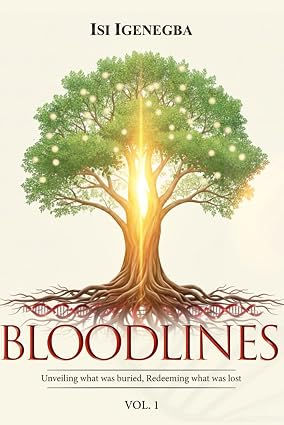
Bloodlines: Unveiling What Was Buried, Redeeming What Was Lost sounds like a foundational book for anyone trying to understand the hidden roots of personal, family, or spiritual patterns.
The title suggests two movements.
First, there is unveiling. Something has been buried, ignored, misunderstood, or passed down without being named. That could include family cycles, inherited beliefs, spiritual patterns, identity wounds, or places where the past still speaks louder than truth.
Then, there is redemption. The book does not appear to stop at exposure. Its subtitle points toward recovery. What was lost can be redeemed. What was covered can be brought into the light. What shaped a person does not have to define the future.
This makes Bloodlines a strong first read for people who feel stuck in repeated cycles and want language for what they have sensed but could not explain.
It may be especially useful if you are asking questions like these:
Why do certain patterns keep repeating in my life or family?
How do I honor where I come from without staying bound to what harmed me?
What does spiritual restoration look like beyond a surface-level change?
How do I interpret my history without letting it become my identity?
The strength of a book like this is its emotional and spiritual weight. The risk is reading it too quickly. A theme like bloodlines asks for reflection. It is not the kind of subject to rush through in a weekend and put back on the shelf.
A helpful way to read it is to keep a private journal nearby. After each chapter, write down one pattern you recognize, one belief you need to test, and one area where you want restoration. This turns the reading experience into more than information. It becomes a mirror.
Use the workbook when you are ready to process, not just understand

The Bloodlines Workbook: Unveiling What Was Buried, Redeeming What Was Lost sounds like the companion resource for readers who do not want to leave the main book at the level of insight.
Workbooks matter because recognition is only one part of growth. Many people can identify a pattern. Fewer people sit with it long enough to trace it, pray through it, respond to it, and replace it with a different way of living.
If the main Bloodlines book gives the framework, the workbook likely gives the reader space to engage that framework personally. That could include questions, guided reflection, exercises, declarations, or practical prompts.
The workbook is best read slowly, perhaps even more slowly than the main book. One section at a time is enough. If a prompt brings up something heavy, pause. If a question leads to prayer, stay there. If an exercise exposes an area that needs wise counsel, do not treat the page as the only support you need.
This is where maturity matters. Books can open important doors, but they do not replace pastoral care, trusted community, counseling, or prayerful discernment when deeper issues surface.
The workbook may be the best choice if you already read Bloodlines and felt stirred, but not settled. It is also a good fit if you are leading a small group or personal study and need a structure that helps people stay engaged.
A simple rhythm could look like this:
Read one section from the main book.
Complete the related workbook questions.
Write one clear prayer or declaration.
Choose one practical response for the week.
Revisit the same notes after several days and look for what changed.
That rhythm keeps the process grounded. It helps prevent a powerful idea from becoming a passing emotional moment.

Move to Blueprints of Dominion when you are ready to build

After dealing with buried patterns, a reader often needs a new structure. That is where Blueprints of Dominion seems to fit.
The word “blueprints” suggests design, order, planning, and intentional building. The word “dominion” suggests authority, stewardship, and active participation in God-given purpose. Together, the title points toward a book about living from a defined design rather than drifting through inherited confusion.
This book may be especially helpful after Bloodlines because healing without structure can leave a person unsure of what comes next. Once old patterns are exposed, new patterns must be built.
A blueprint does not build the house by itself. It shows what belongs where. It gives proportion, sequence, and direction. In the same way, a spiritual blueprint can help a reader think carefully about calling, discipline, identity, responsibility, and daily choices.
Blueprints of Dominion may speak to readers who want more than personal breakthrough. They want to understand assignment. They want to connect inner restoration with outward fruit.
Questions to bring into this book might include:
What am I called to steward?
What has God placed in my hands right now?
What habits support the person I believe I am becoming?
Where do I need order, not just desire?
What does kingdom responsibility look like in ordinary life?
This is a good book to read with a pen in hand. Sketch your own “blueprint” as you go. It does not need to be dramatic. It can include simple areas like prayer, family, finances, service, character, work, rest, and spiritual discipline.
The goal is not to control every detail of life. The goal is to stop living without design.
Read Language of Dominion to examine the words shaping your world

Language of Dominion suggests a shift from structure to speech. That matters because language is one of the main ways people reveal what they believe.
A person can desire change while still speaking from fear. A person can pray for restoration while still rehearsing defeat. A person can say they believe in purpose while constantly using language that agrees with limitation, shame, or confusion.
This book sounds like it focuses on the vocabulary of authority. Not empty positivity. Not forced slogans. Rather, the kind of speech that lines up with identity, conviction, Scripture, and responsibility.
The title invites readers to ask a direct question: What language do I live by?
That question can be uncomfortable. Many people inherit words long before they choose them. Families have languages. Communities have languages. Pain has a language. Fear has a language. Faith has a language too.
Language of Dominion may help readers notice the difference between:
Speech that repeats old patterns
Words shaped by fear
Complaints that become habits
Labels placed by others
Speech that agrees with redeemed identity
Words shaped by faith and responsibility
Declarations that call for alignment
Names rooted in truth
The most practical way to read this book is to listen to yourself for a week before you start. Pay attention to what you say when you are tired, disappointed, delayed, corrected, or afraid. Those moments reveal more than polished language does.
Then, as you read, write down phrases you need to stop feeding and truths you need to practice speaking. This is not about pretending hard things are easy. It is about refusing to let hard things become the final authority over your mouth.

Keep Dominion Codex nearby as a reference and reinforcement tool

Dominion Codex sounds like a concentrated resource, the kind of book readers return to after working through the broader themes. The word “codex” suggests a collected body of principles, records, or guiding truths.
If Bloodlines helps uncover what needs redemption, Blueprints of Dominion helps establish design, and Language of Dominion helps reshape speech, then Dominion Codex may function as a summary, reference, or field guide for ongoing growth.
A codex is not only for first-time discovery. It is for return. It gives readers something to revisit when they need correction, clarity, or reinforcement.
This book may be especially useful for:
Readers who like concise principles.
Leaders who need language for teaching or discussion.
People building a personal study library around dominion.
Readers who want reminders they can come back to during transition.
Anyone who prefers a guide that can be read in short sections.
The best way to approach Dominion Codex may be to read it after the other books, then keep it close. Use it as a companion during prayer, planning, journaling, or personal review.
You might choose one principle each week, write it at the top of a journal page, and track how it applies to your choices. That kind of repetition helps a truth move from page to practice.
The best reading order depends on where you are starting from
There is no single perfect order for every reader, but the titles suggest a natural path.
Reading stage | Book to choose | Why it fits |
Start with roots | Bloodlines | It names buried patterns and points toward redemption. |
Process personally | Bloodlines Workbook | It turns insight into reflection and response. |
Build new structure | Blueprints of Dominion | It helps move from healing into design and responsibility. |
Change speech patterns | Language of Dominion | It focuses attention on words, belief, and authority. |
Reinforce the journey | Dominion Codex | It offers a resource to revisit as principles take shape. |
If you are new to Isi Igenegba’s work, start with Bloodlines. It appears to be the most foundational title because it addresses what came before. If you have already done inner work and want direction for what to build next, Blueprints of Dominion may be the better starting point.
If your main struggle is negative speech, fear-based confession, or double-minded language, go to Language of Dominion sooner. If you want a compact resource to keep returning to, choose Dominion Codex.
The Bloodlines Workbook is best paired with the main Bloodlines book, not treated as an afterthought. Workbooks do their best work when the reader gives them time and honesty.
How to study the series without rushing the process
Books on bloodlines and dominion can stir strong thoughts. They touch identity, family history, spiritual authority, personal responsibility, and the way people interpret their lives. That means slower is usually better.
A balanced study plan could take several weeks or months.
Give each book its own season
Do not stack all five books into one rushed reading challenge. Let each theme breathe.
Read Bloodlines when you are ready to examine roots. Use the workbook while the ideas are still fresh. Move to Blueprints of Dominion when you are ready to build. Read Language of Dominion when you can pay attention to your words in real time. Keep Dominion Codex for review and reinforcement.
Pair reading with prayer and reflection
These books appear to be spiritual in nature, so they should not be treated only as intellectual content. Take notes. Pray through hard places. Ask questions. Sit with the material before moving on.
A simple note page can include:
What stood out to me
What challenged me
What I need to stop agreeing with
What I need to practice
What I need to pray through
Read with discernment and humility
Strong spiritual language can inspire growth, but it should also produce humility, not pride. Dominion should never become domination over others. Authority should serve purpose, stewardship, obedience, and love.
A healthy reading of these books should lead to greater clarity, stronger responsibility, deeper healing, and a more faithful way of living.
The strongest recommendation for most readers
For most readers, the best starting point is Bloodlines: Unveiling What Was Buried, Redeeming What Was Lost, followed closely by the Bloodlines Workbook. That pairing gives the journey a strong foundation. It begins with roots before moving to responsibility.
After that, Blueprints of Dominion seems like the next natural step because it shifts attention from what must be redeemed to what must be built. Language of Dominion then sharpens the way a reader speaks, thinks, and agrees with truth. Dominion Codex can serve as a lasting reference for the full journey.
Taken together, Isi Igenegba’s books appear to form a meaningful path: uncover, redeem, build, speak, and reinforce. That order is simple, but it is not shallow.
The real value of these books will not come from finishing the stack. It will come from letting the themes become part of life. Read slowly. Take notes honestly. Pray through what surfaces. Build with intention. Speak with care. Then return to the principles whenever you need to remember who you are becoming.

Comments